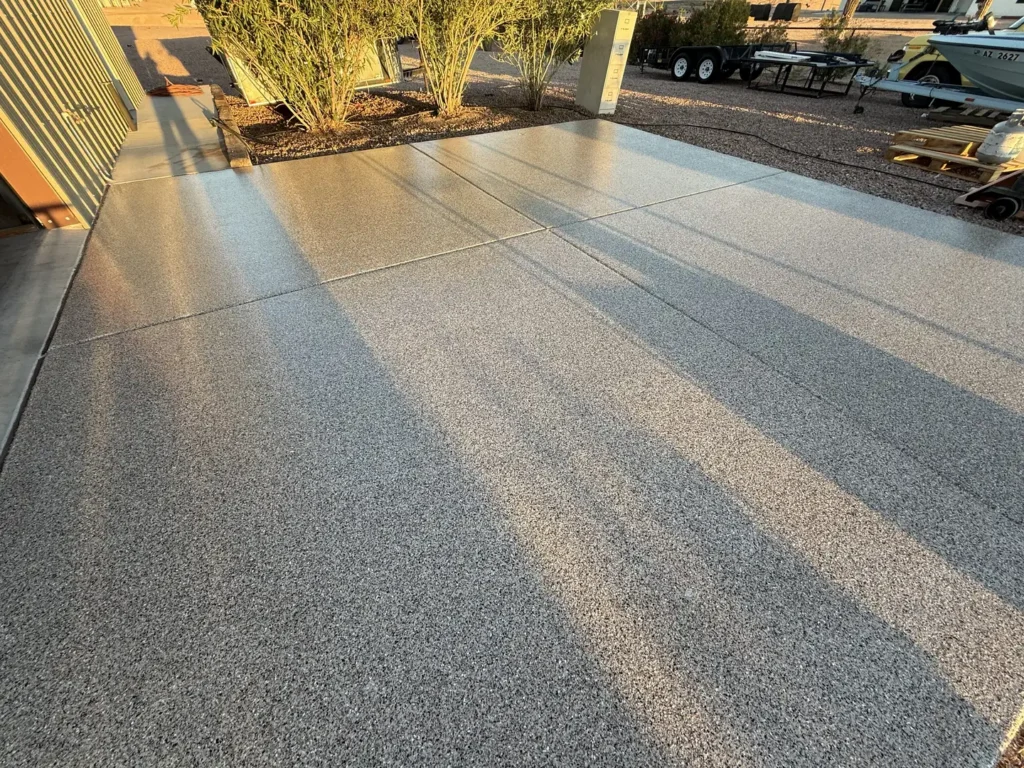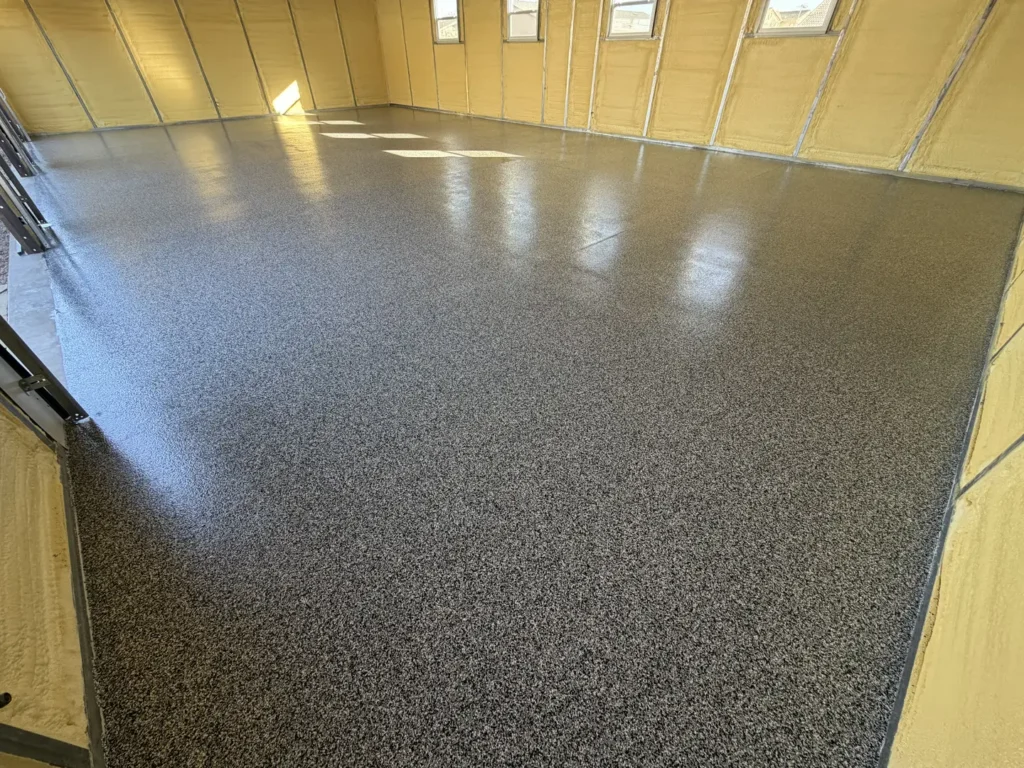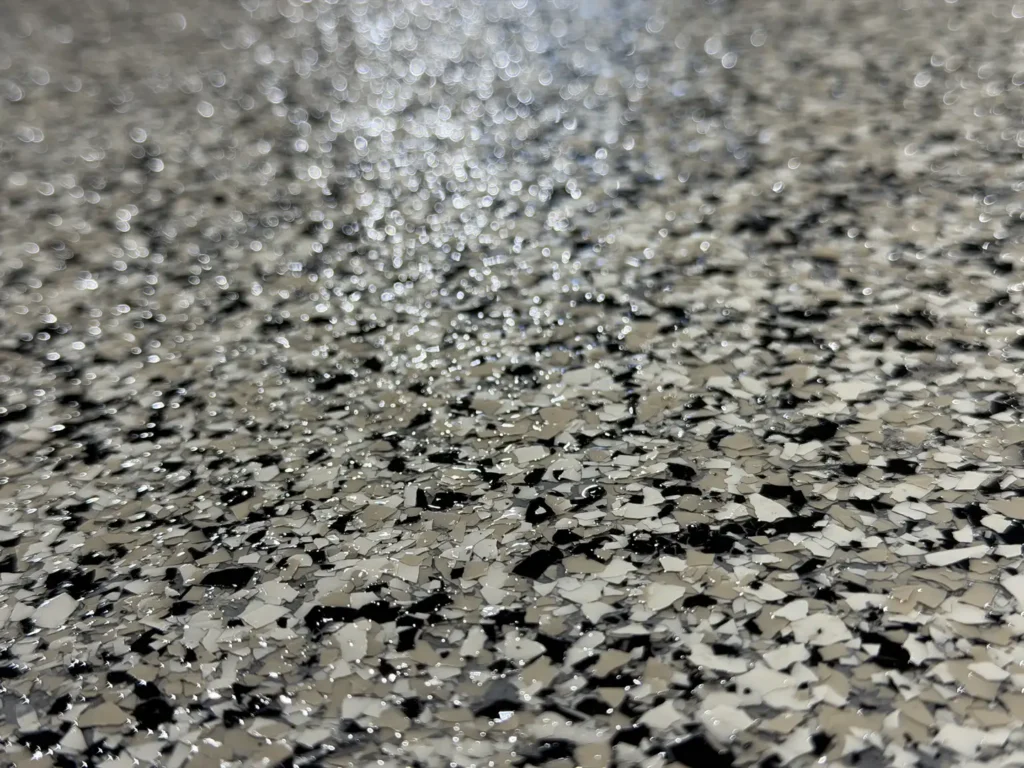
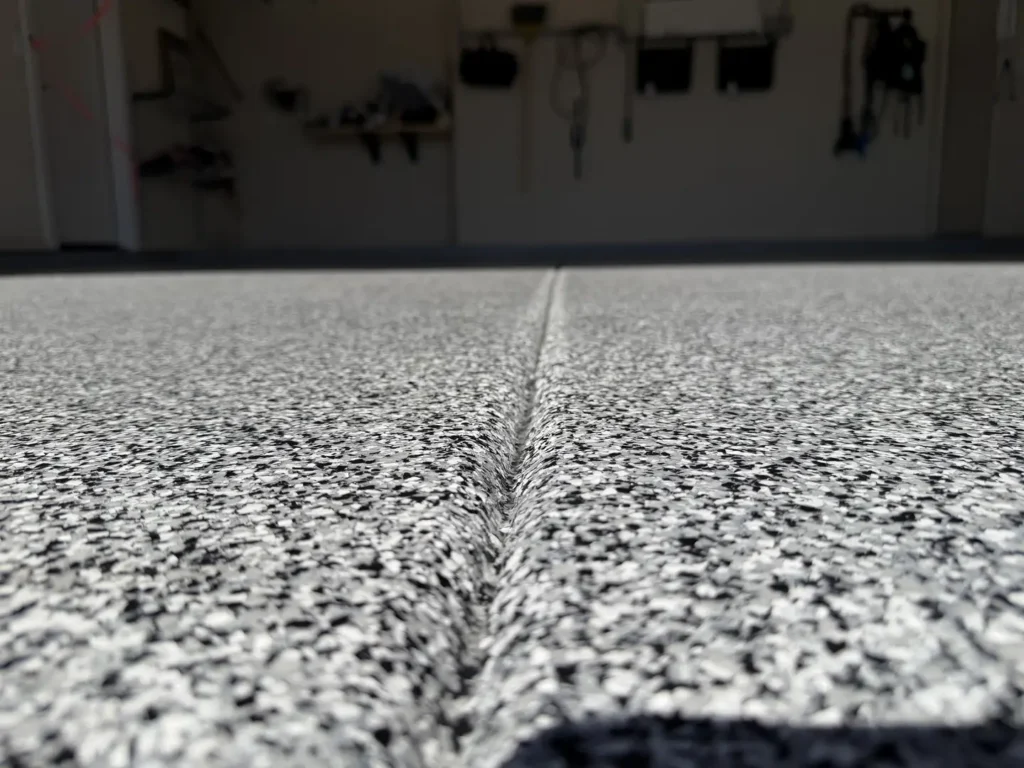
A garage floor experiences daily wear from vehicles, foot traffic, storage, spills, and temperature changes, which can eventually lead to damage and a less functional space. There are five main signs that indicate it may be time for a garage floor upgrade, including cracks, stains, excess dust, aging surfaces, and difficult maintenance.
Visible Cracks or Damage
Visible cracks and damage are some of the clearest signs that your garage may be ready for a garage floor upgrade. Over time, concrete floors can develop issues like surface cracks, deep cracks, chips, flaking, and pitting due to natural settling, temperature changes, heavy vehicle use, and daily wear and tear.
Especially in Arizona, extreme heat and frequent temperature fluctuations can put additional stress on concrete, causing these problems to become more noticeable over time. Even small cracks can create bigger issues by collecting dirt and debris, allowing moisture to penetrate the surface, and making the floor more difficult to clean and maintain.
Instead of allowing these problems to continue worsening, a professional garage floor upgrade can help restore the appearance of your space while adding a protective layer that will improve resistance to the daily wear and tear.
Stains and Spills
Stains and spills that are difficult to remove are another sign that your garage may be ready for a garage floor upgrade. Concrete is naturally porous, meaning it absorbs oil, grease, chemicals, dirt, and other contaminants. When these liquids soak into the concrete, they leave behind stubborn stains, discoloration, and lingering odors that are difficult to eliminate with regular cleaning. Over time, repeated exposure to spills weakens the concrete and makes your garage look poorly maintained.
A professional garage floor coating creates a sealed, nonporous barrier that helps protect the concrete underneath while making everyday messes easier to clean. With a durable garage floor upgrade, homeowners can enjoy a cleaner, more attractive garage that is better equipped to handle daily wear and tear.
Excess Dust
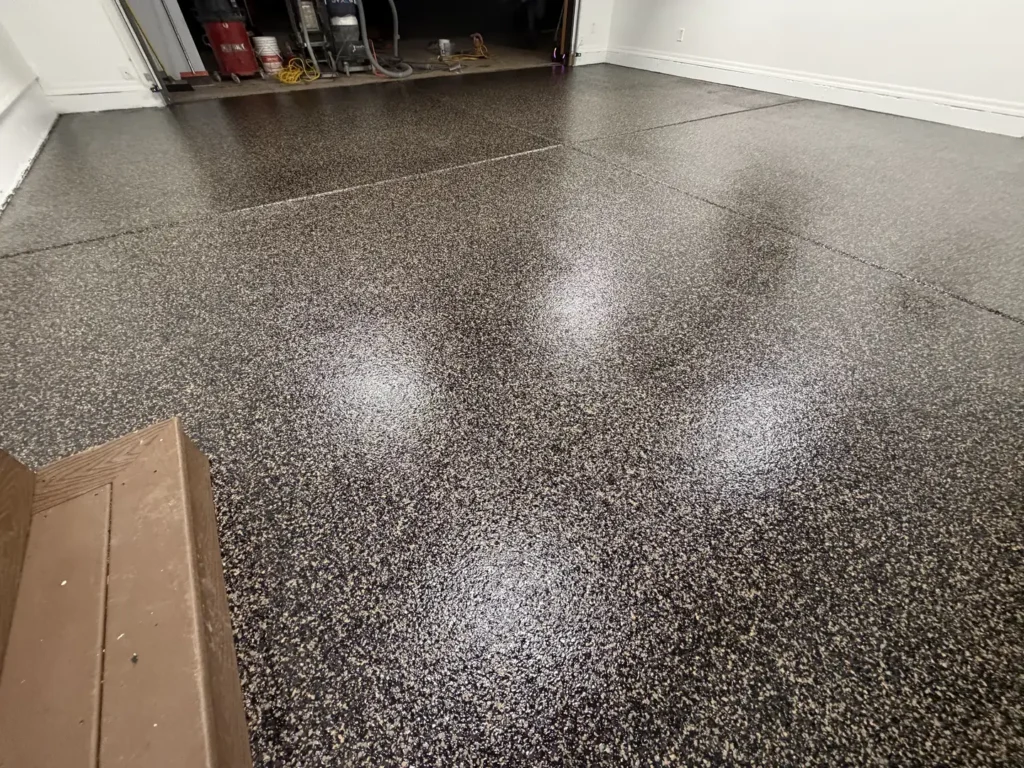
Excess dust is another sign that your garage floor may be showing its age. Bare concrete can gradually break down from vehicle traffic, foot traffic, and everyday wear, causing fine particles to collect on the surface.
In Arizona’s dry, hot climate, dust buildup can become even more noticeable, leaving a layer of residue on floors, storage items, and equipment. While regular sweeping may provide a temporary solution, the ongoing accumulation of dust is a sign that your concrete garage floor needs better protection. A professional garage floor coating helps seal the concrete, reducing dust buildup and creating a cleaner, more durable surface that is easier to maintain.
Wear and Aging
A worn, aging garage floor is another indication that it may be time for an upgrade. Garage floors are constantly exposed to stress from vehicles, foot traffic, storage items, temperature changes, and everyday activities. The everyday wear and tear can lead to fading, discoloration, cracks, chips, flaking, and other signs of deterioration that make the space look outdated.
In Arizona, extreme heat and UV exposure can accelerate the damage to a garage floor beyond the everyday wear and tear, causing concrete surfaces to break down faster. While these issues may start as cosmetic concerns, they can eventually affect the durability of the floor. A professional garage floor coating can restore the appearance of an aging garage floor.
Difficult Maintenance
A garage floor that is difficult to clean and requires constant maintenance is annoying and overwhelming. Getting a garage floor upgrade is the perfect solution to this problem. All the dust, dirt, oil, and other debris that stain, crack, and damage your concrete garage floor make maintenance very difficult.
Instead of spending extra time scrubbing and maintaining an aging floor, a professional garage floor coating can provide a smooth, sealed surface that is easier to care for. With improved resistance to stains and daily wear, a garage floor upgrade helps homeowners maintain a cleaner, more functional space with less ongoing maintenance.
Why Choose Us?
At Garage Solutions of Arizona, we help homeowners completely transform their garages into clean, organized, and functional spaces designed around their needs. From durable garage floor coating to custom storage systems, cabinets, shelving, and overhead solutions, our team provides complete garage upgrades that improve the appearance and usability of your garage. Whether you need a better way to store your belongings, a dedicated workspace, or a better floor coating, Garage Solutions of Arizona provides solutions that will maximize your garage space. Contact us today for a free quote.